Tea Tree Oil and Undecylenic Acid for Nails: the KeraFirm Pro guide
Tea tree oil and undecylenic acid are two of the most recognised names in topical nail care. This KeraFirm Pro guide explains what each one is, how they differ, how they are used together, and how the brush-on formula combines them with other botanical oils.
What tea tree oil and undecylenic acid are, and how a brush-on uses them.
- Tea tree oil
- An Australian botanical oil that is one of the most recognised names in traditional topical skin and nail care.
- Undecylenic acid
- A plant-derived fatty acid used in over-the-counter topical nail and skin formulas for decades.
- Together
- KeraFirm Pro pairs 5% undecylenic acid USP with tea tree and other botanical oils in a precise brush-on.
- How used
- Applied to the nail and cuticle up to four times a day, for external use only.
Two ingredients come up again and again in topical nail care: tea tree oil and undecylenic acid. They work in different ways and have very different origins, but both have long been used on nails and the skin around them. This guide explains each in plain language and shows how KeraFirm Pro combines them with other botanicals in a brush-on.
What is tea tree oil?
Tea tree oil is steam-distilled from the leaves of Melaleuca alternifolia, a shrub native to Australia. Aboriginal Australians traditionally used the crushed leaves in skin care, and the oil has since become a fixture of natural topical products worldwide. In a nail formula it contributes a clean, aromatic character and a long tradition of use on skin and nails. It is also one of the better-studied essential oils: a standing review in Clinical Microbiology Reviews catalogues its chemical composition and its laboratory activity (Carson CF, Hammer KA, Riley TV, Melaleuca alternifolia (Tea Tree) oil: a review of antimicrobial and other medicinal properties, Clin Microbiol Rev 2006). The NCCIH is blunter about practicalities — tea tree oil is used on the skin and should never be swallowed.
What is undecylenic acid?
Undecylenic acid is an unsaturated fatty acid originally derived from castor oil. It has been used in over-the-counter topical nail and skin preparations for decades. Laboratory work has looked at how the fatty acid changes the behaviour of common skin yeasts in culture (McLain N et al., Undecylenic acid inhibits morphogenesis of Candida albicans, Antimicrob Agents Chemother 2000), and it has appeared in small clinical work on nails in combination formulas (Rehder P, Nguyen TT, A new concept in the topical treatment of onychomycosis with cyanoacrylate, undecylenic acid, and hydroquinone, Foot Ankle Spec 2008). On the KeraFirm Pro label it is the single quantified active, at a 5% concentration, sitting alongside the botanical oils. Bench chemistry and a combination case series are background, not proof about this finished cosmetic.
How the two differ
Tea tree oil is a whole botanical essential oil — a complex mix of naturally occurring compounds — while undecylenic acid is a single, defined fatty acid. In topical formulas they are complementary: the fatty acid is the label’s quantified active, and the essential oils lend a conditioning, aromatic finish.
| Ingredient | Origin | Traditional / general role |
|---|---|---|
| Tea tree oil | Melaleuca leaves (Australia) | Classic topical skin and nail botanical; aromatic and cleansing in character. |
| Undecylenic acid | Plant-derived fatty acid | Long used in over-the-counter topical nail and skin formulas. |
| Lemongrass oil | Cymbopogon grass leaves | Bright citrus-herbal aromatic; on the label between vitamin E and lavender. |
| Lavender oil | Lavandula flowers | Soothing, calming aromatic used in skin-care routines. |
| Vitamin E | Tocopherol | Antioxidant, skin-conditioning ingredient. |
See the full KeraFirm Pro formula →
How does KeraFirm Pro combine them?
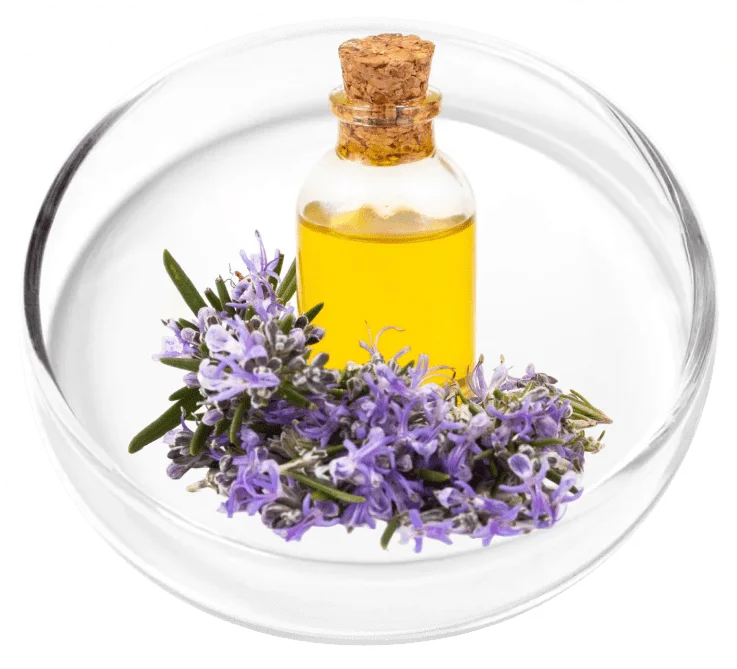
KeraFirm Pro brings 5% undecylenic acid USP together with almond oil, flaxseed oil, tea tree essential oil, aloe vera leaf extract, vitamin E, lemongrass oil and lavender oil in an isopropyl palmitate base. Those nine names are the whole printed ingredient statement — the brand’s marketing also mentions manuka, clove, camphor, menthol, walnut and chia, but none of them is on the panel, so we do not count them. The precision applicator places the blend on the nail and cuticle, and a cotton swab works it into the surrounding skin. For the wider routine these ingredients slot into, read our guide to keeping toenails healthy and clear, and for the timing of applications across a normal day see a daily nail and foot care routine. Almond oil, for its part, is one of the oldest emollient plant oils in personal care (Ahmad Z, The uses and properties of almond oil, Complement Ther Clin Pract 2010).
How to use the two ingredients well
Because both are topical, the essentials are the same as any brush-on routine: apply to clean, dry nails, follow the label’s four-times-daily schedule, keep it out of your eyes, and stop if you notice irritation. A patch of skin can be tested first if you are sensitive to essential oils.
Make it a daily habit
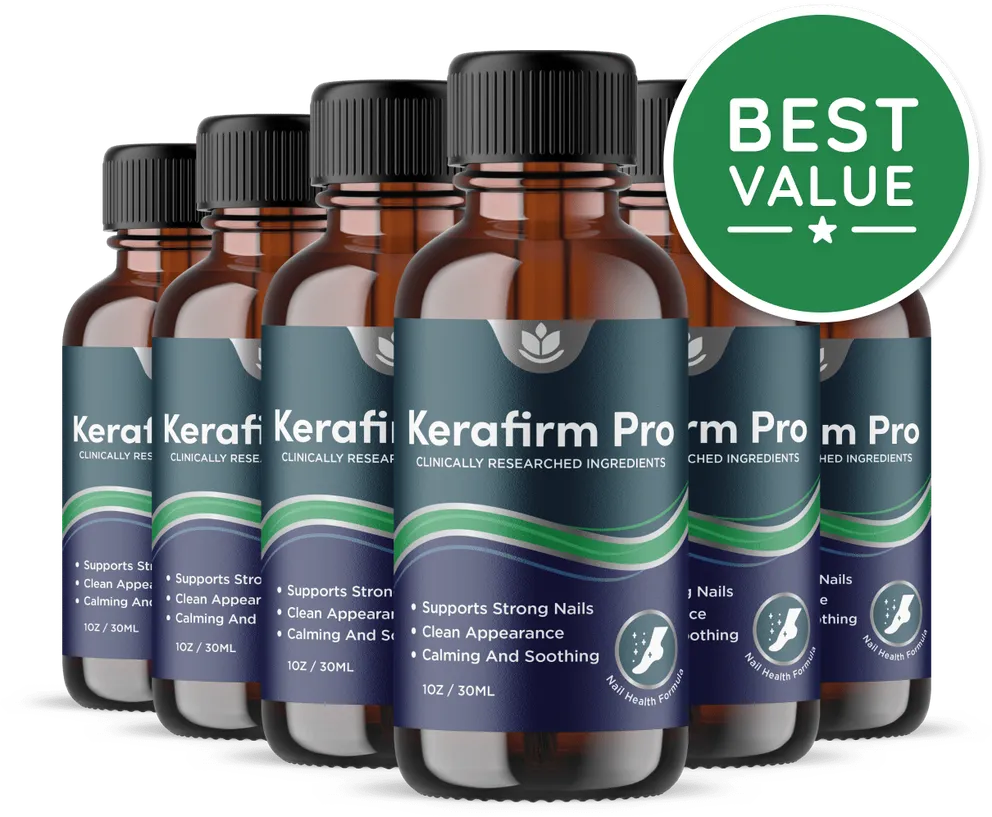
KeraFirm Pro is a brush-on whose printed label pairs 5% undecylenic acid USP with tea tree, lavender, lemongrass, almond, flaxseed, aloe and vitamin E. The six-bottle bundle is the lowest price per bottle at $49 ($294 in total), with free U.S. shipping and a 60-day guarantee.
Order KeraFirm Pro — from $49/bottleAre they safe?
Tea tree oil and undecylenic acid are intended for external use only. Essential oils can cause irritation and contact allergy in a minority of people — a documented risk with tea tree oil, particularly when the oil has oxidised in an old bottle (Hammer KA et al., A review of the toxicity of Melaleuca alternifolia (tea tree) oil, Food Chem Toxicol 2006) — so do a small patch first if you are prone to reactions, avoid broken skin, and keep products away from the eyes and out of the reach of children. If you are pregnant, nursing or have a medical condition, check with your doctor before starting any new topical product.
| Practice | Why it matters |
|---|---|
| Apply to clean, dry nails | Helps the solution reach the nail evenly |
| Follow the 4×-daily schedule | Consistency is the point with topical care |
| External use only | These ingredients are not for ingestion |
| Patch test if sensitive | Essential oils can irritate some skin |
The bottom line
Tea tree oil brings a classic botanical tradition, and undecylenic acid brings a defined, decades-old topical fatty acid. KeraFirm Pro pairs them — the acid quantified at 5% on the label, the oils as a conditioning blend — in a brush-on you apply to the nail and cuticle. What no source here shows is that any of it changes a nail: a small open study of a different vitamin-E-and-essential-oil nail product is the closest thing in the literature, and it had no control group (Alessandrini A et al., An open study to evaluate effectiveness and tolerability of a nail oil composed of vitamin E and essential oils, Skin Appendage Disord 2020). See the full ingredient list or the packages to learn more.
Frequently asked questions
What does tea tree oil do in a nail product?
Tea tree oil is a traditional topical botanical from the Australian Melaleuca shrub. In a nail formula it lends a clean, aromatic, conditioning character and a long history of external use on skin and nails.
What is undecylenic acid?
Undecylenic acid is a plant-derived unsaturated fatty acid used in over-the-counter topical nail and skin formulas for decades. On the KeraFirm Pro label it is the quantified active at 5%.
How do tea tree oil and undecylenic acid work together?
They are complementary: the fatty acid is the label's quantified active, and tea tree and the other essential oils provide a conditioning, aromatic finish in the same brush-on.
How does KeraFirm Pro use them?
KeraFirm Pro combines 5% undecylenic acid USP with tea tree, manuka, lavender, almond, aloe and vitamin E, applied to the nail and cuticle up to four times a day with a brush and swab.
Are tea tree oil and undecylenic acid safe?
Both are for external use only. Essential oils can irritate sensitive skin, so patch test if needed, avoid broken skin and the eyes, keep out of reach of children, and check with a doctor if pregnant, nursing or on medication.
Can I swallow these ingredients?
No. Tea tree oil and undecylenic acid in KeraFirm Pro are topical only and must not be ingested; keep the product away from the mouth and eyes.
Try KeraFirm Pro risk-free for 60 days →
KeraFirm Pro is a topical cosmetic product for external use, not a treatment for any medical condition. These statements have not been evaluated by the Food and Drug Administration. This product is not intended to diagnose, treat, cure or prevent any disease. Always consult a qualified healthcare professional about your individual needs.
References & further reading
- Carson CF, Hammer KA, Riley TV. Melaleuca alternifolia (Tea Tree) oil: a review of antimicrobial and other medicinal properties. Clin Microbiol Rev. 2006;19(1):50–62. — PubMed PMID 16418522
- Hammer KA, Carson CF, Riley TV, Nielsen JB. A review of the toxicity of Melaleuca alternifolia (tea tree) oil. Food Chem Toxicol. 2006;44(5):616–25. — PubMed PMID 16243420
- McLain N, Ascanio R, Baker C, Strohaver RA, Dolan JW. Undecylenic acid inhibits morphogenesis of Candida albicans. Antimicrob Agents Chemother. 2000;44(10):2873–5. — PubMed PMID 10991877
- Rehder P, Nguyen TT. A new concept in the topical treatment of onychomycosis with cyanoacrylate, undecylenic acid, and hydroquinone. Foot Ankle Spec. 2008;1(2):93–6. — PubMed PMID 19825699
- Alessandrini A, Starace M, Bruni F, Piraccini BM. An open study to evaluate effectiveness and tolerability of a nail oil composed of vitamin E and essential oils in mild to moderate distal subungual onychomycosis. Skin Appendage Disord. 2020;6(1):14–18. — PubMed PMID 32021856
- Ahmad Z. The uses and properties of almond oil. Complement Ther Clin Pract. 2010;16(1):10–12. — PubMed PMID 20129403
- National Center for Complementary and Integrative Health. Tea Tree Oil. NCCIH health topic page. — nccih.nih.gov/health/tea-tree-oil
- National Institutes of Health, Office of Dietary Supplements. Vitamin E — Fact Sheet for Health Professionals. — ods.od.nih.gov — Vitamin E
Every source above is a single identifiable work. They describe ingredients or nail biology in general terms and are not evidence that any product treats, cures or prevents any condition.
Keep reading: how to keep toenails healthy and clear · a daily nail and foot care routine · back to the blog · homepage.